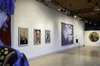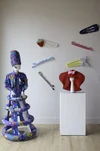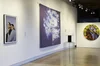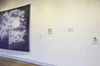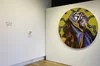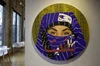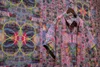
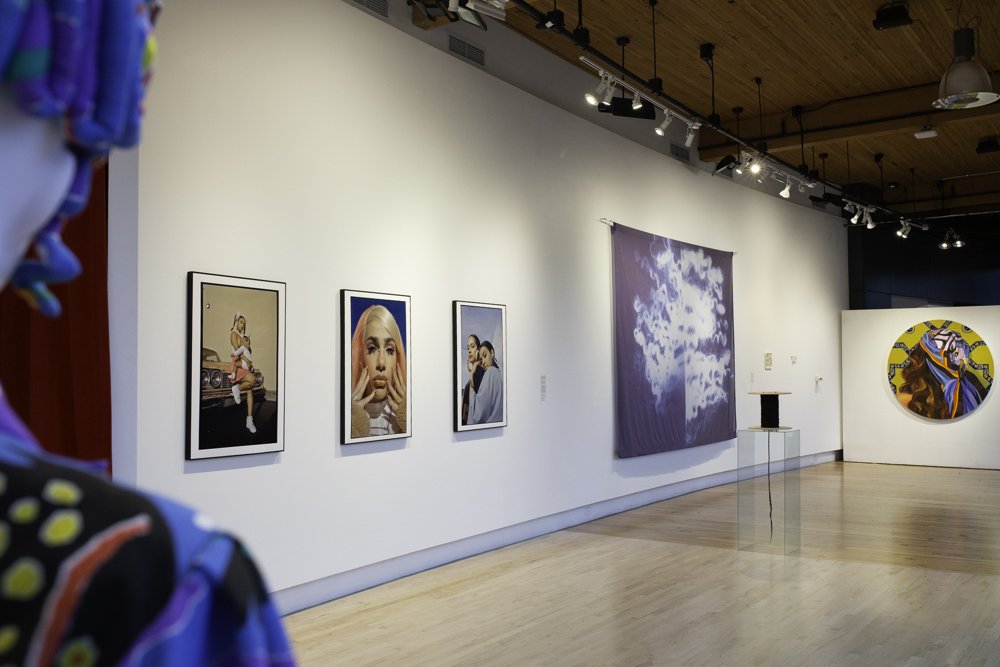
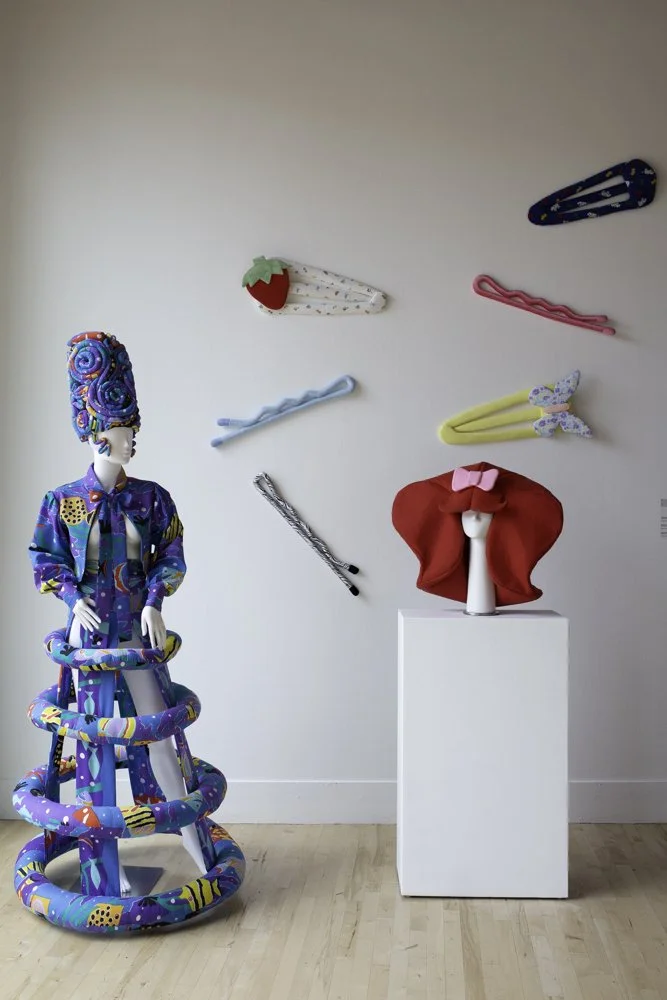
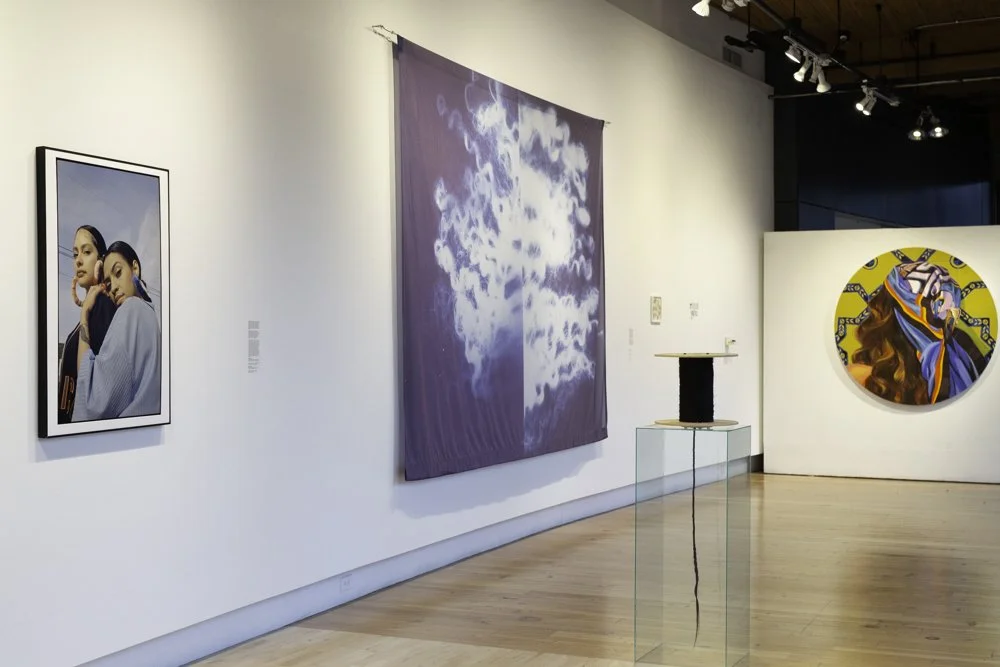
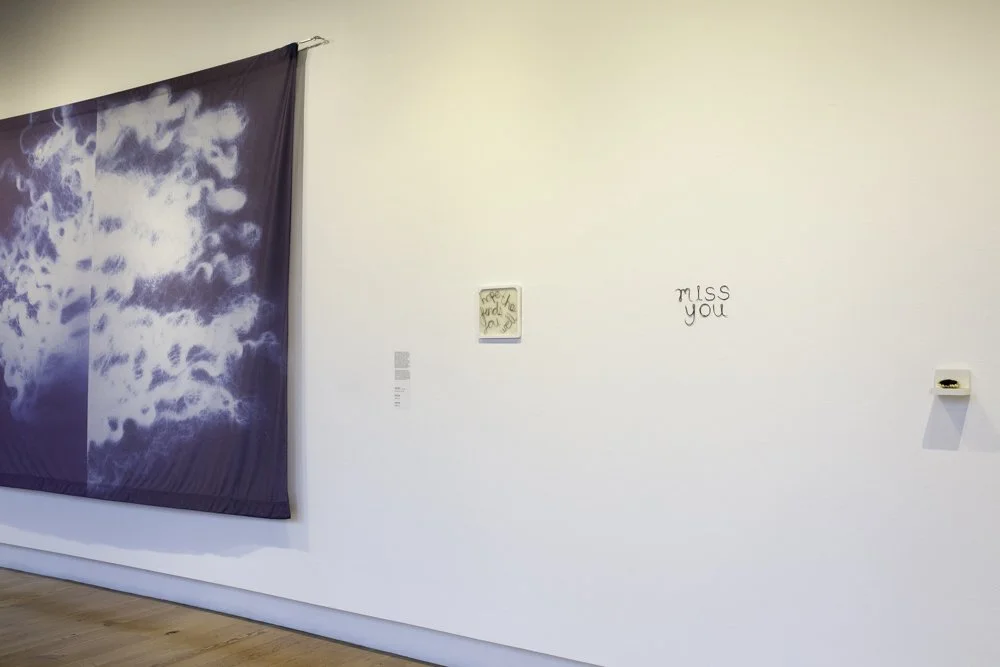
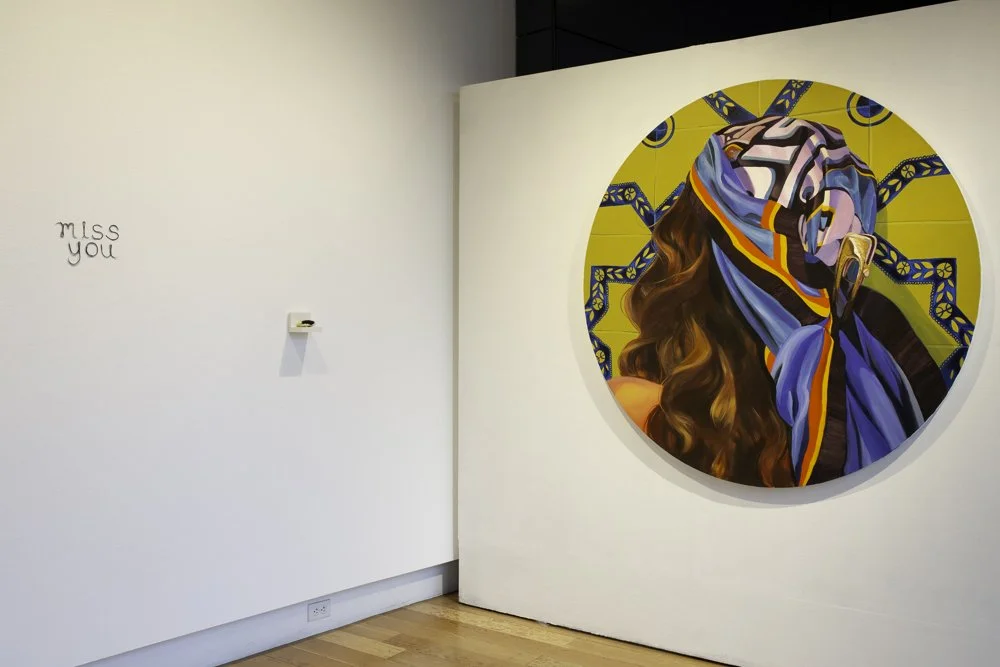
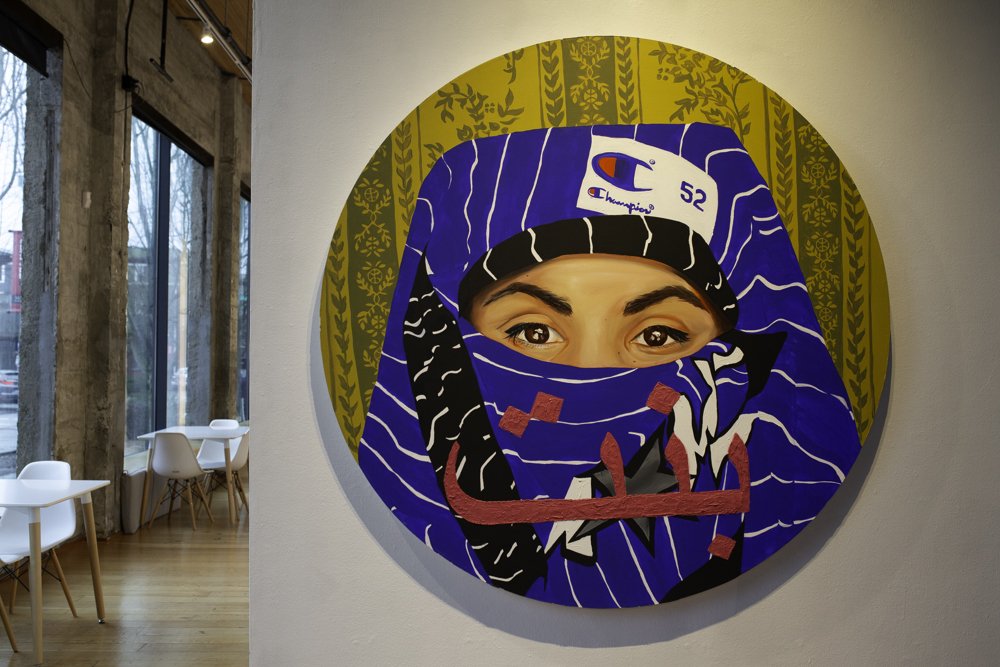
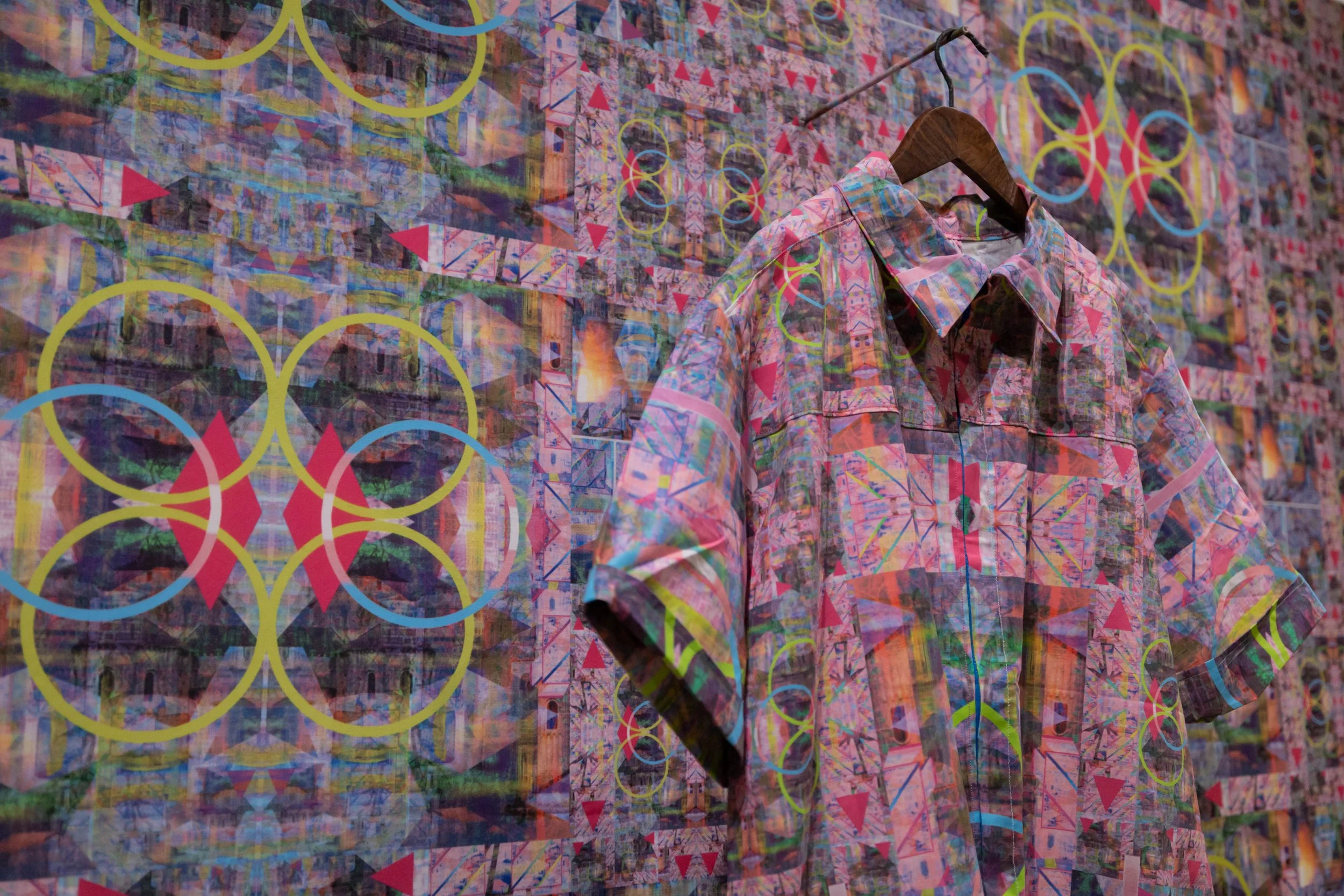
Our hair holds a richly symbolic place across cultures throughout human history. In their work, artists Nadia Ahmed, Shiloh Davies, Thalía Gochez, Lisa Jarrett, and Sa’rah Melinda Sabino consider hair’s importance as a malleable extension of ourselves. With thoughtful attention to craft, they each show us how hair may represent our self-determined identity, heritage, signaling community, and even the passage of time and space. Tying us genetically to our ancestors, this connection is more than metaphorical. In materiality and social meaning, the presence of or even allusion to hair tells both of the deeply personal and collective. Style is a language of storytelling.
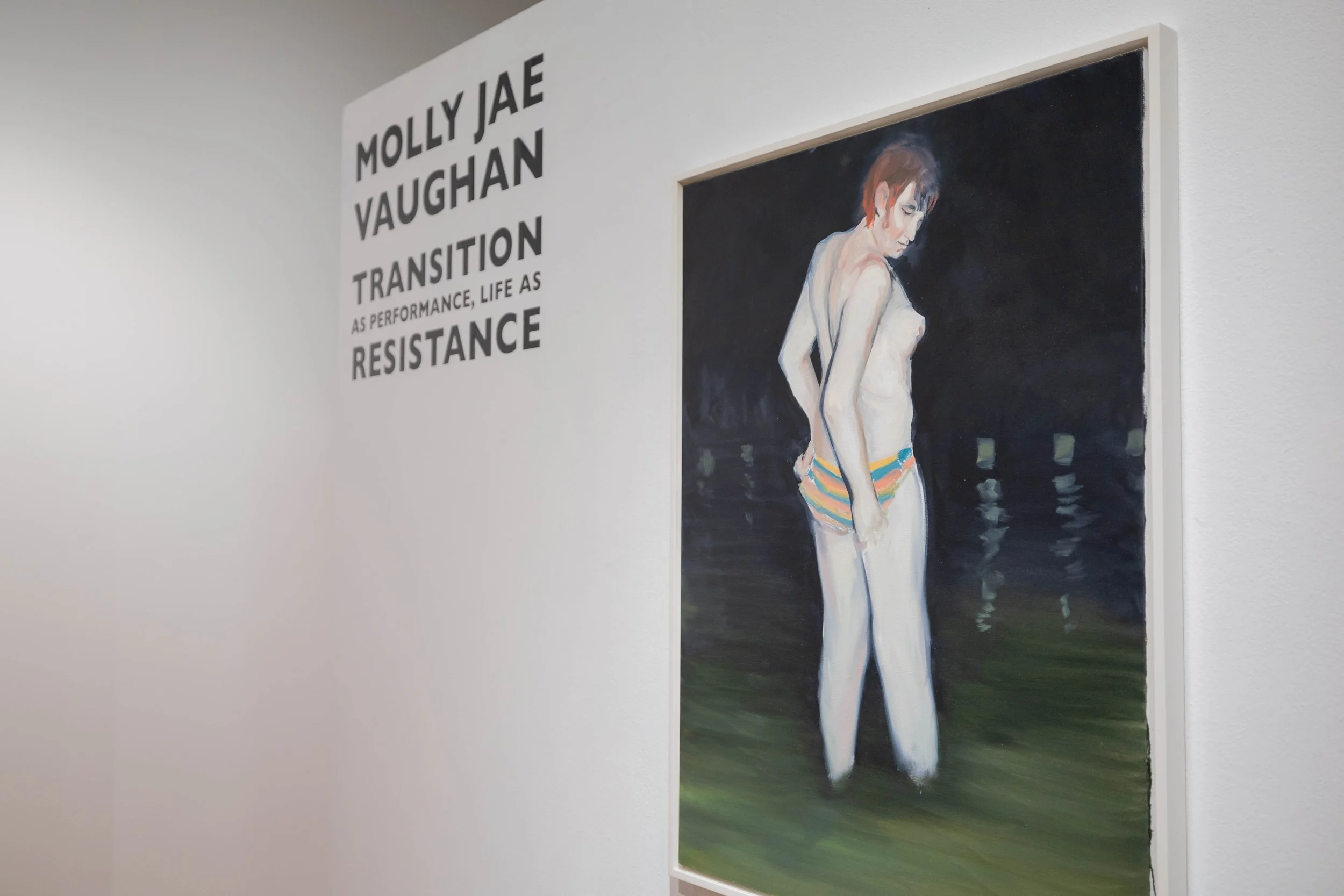
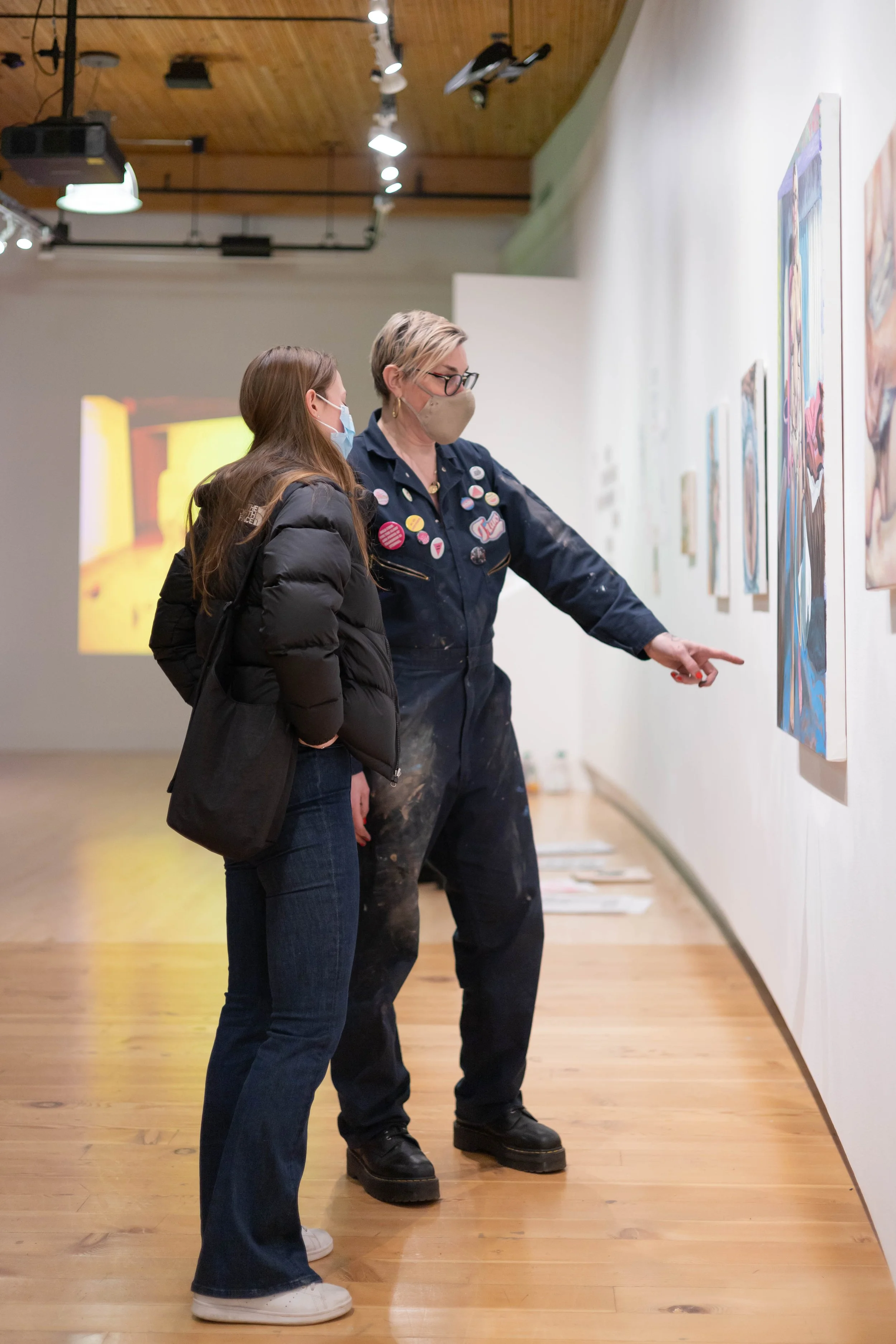
Molly Jae Vaughan: Transition as Performance, Life as Resistance is a fight for herself and her trans community to be seen as wholly human through art. Reflecting Vaughan’s multi-disciplinary approach, with mediums including painting, performance, photography, textile, and screen printing, her dedicated crafted is secondary to the ultimate goal of communication. The uniting, principal question: what does it mean to be trans in America at this moment?
Vaughan shares her deeply personal experience of transitioning to gender alignment, laying bare the most intimate moments of her own becoming, across figurative paintings and The Brutality of Change: Photographic documentation of transexual technology. Vaughan is unflinching in her self-examination and revelation, in turn demanding the same from her audience.
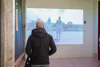
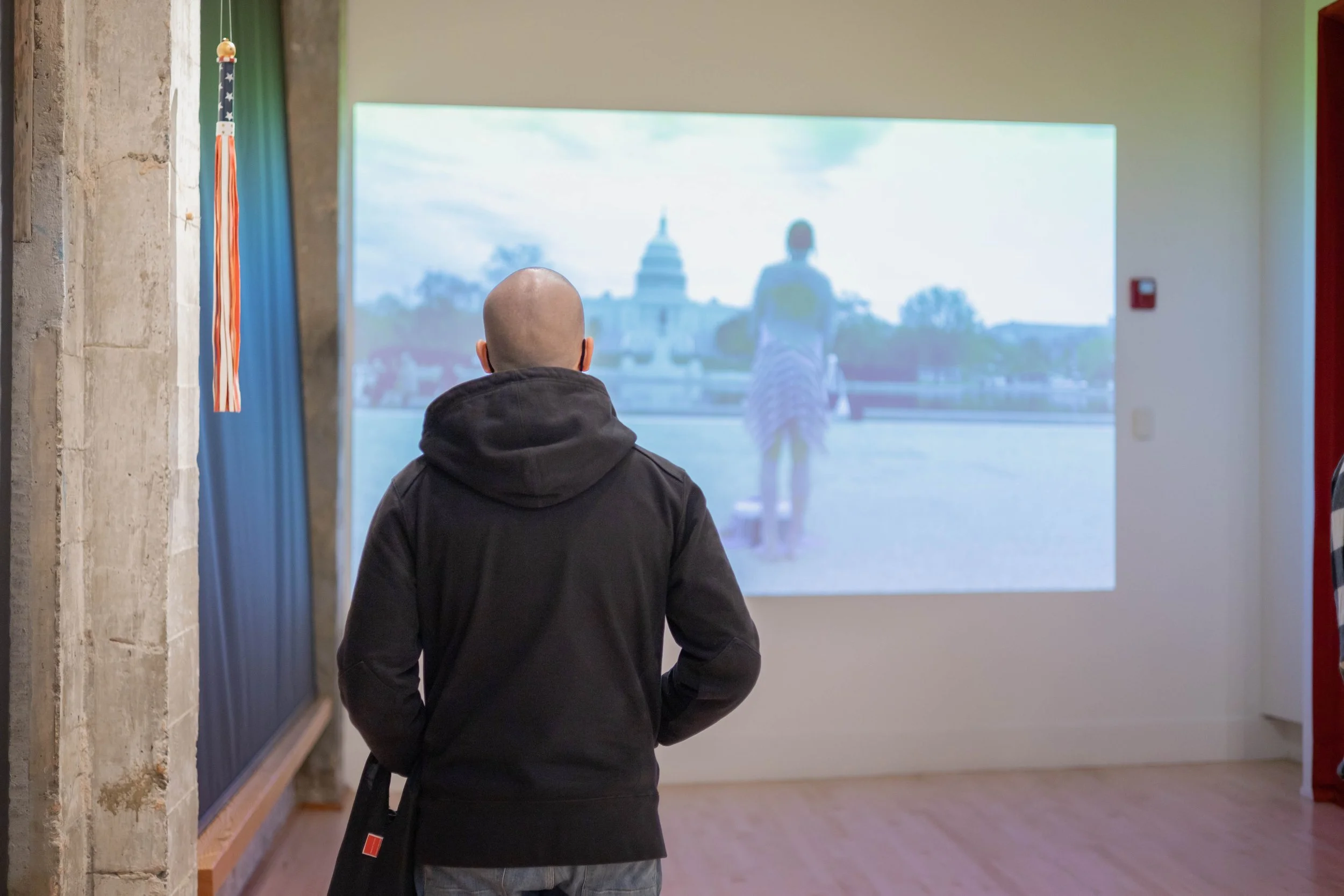
As trans Americans are under siege by an onslaught of anti-trans legislation, she also broadens our lens. Vaughan identifies the danger of this discourse with Project 42: Flags, seen from the window outside, and the screenprints of Misinformation is a Virus. In filmed performances of Atonement for Imaginary Sins, she absorbs the pain of this political vitriol literally, performing self-flagellation before the capitol building and across the American South with a flogger sewn in symbols of the American flag. Each strike across her back represents the staggering 1,320 anti-trans bills proposed in the United States since January 2023 to date. She takes the lashings in silence, but across the work boils the full-throated, full-bodied cry of fury.
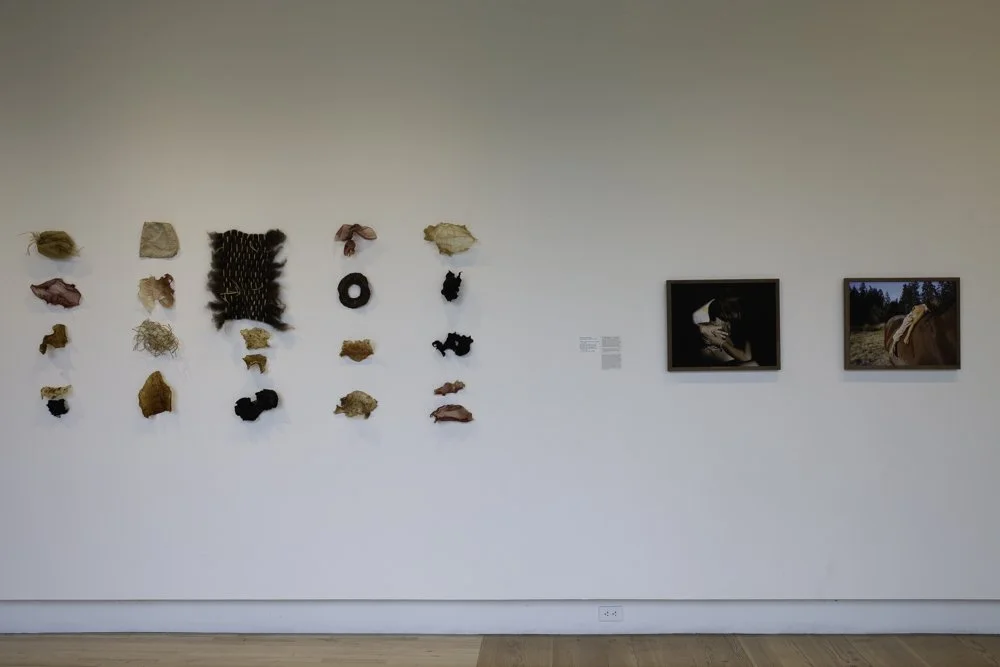
Artists Kamari Bright, Le’Ecia Farmer, and Annie Marie Musselman show us there is collective reward to be found in the care we take for others and our one precious world. These loving gestures of Taking Care: Embrace with Tenderness are pathways to connection, offering abundance, perhaps even hope.
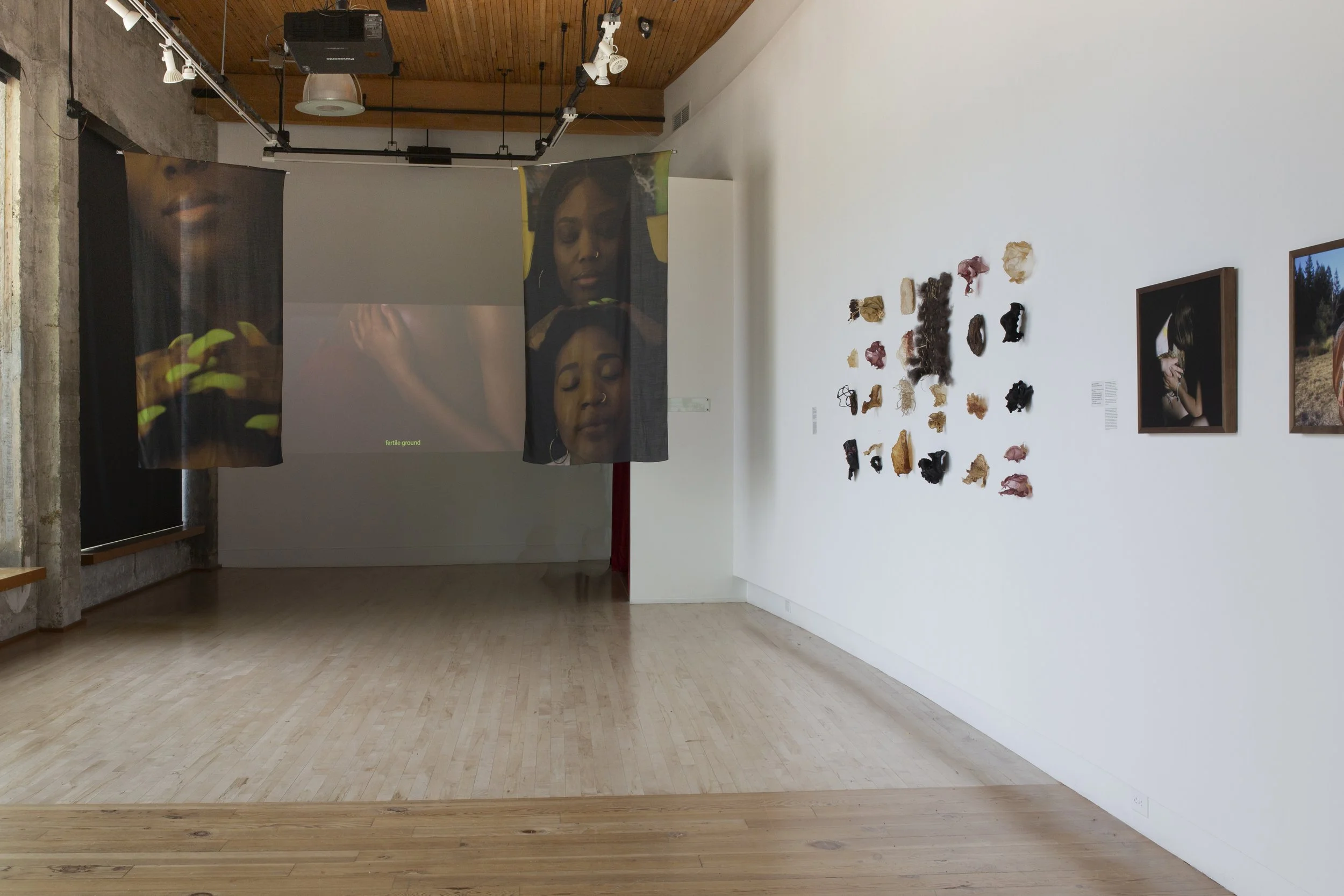
Bright viscerally connects us to our innate need for another’s touch in the merging of language, sound and imagery with video poem, Close Spaces. Inspired by all the pandemic cost us, the immersive experience places us in our body, feeling the extension of her embrace. Farmer curiously explores ancestral technologies to create sustainable materials, which naturally echo our own organic forms. Cotton, wool, raffia, fruits and flowers contain histories through the Black diaspora. Reimagined anew, we see them holding place for future stories. Musselman documents people and animals fostering mutual healing and coexistence. Having begun this long-term project in a moment of profound grief, the reflection of empathy and compassion across social species became her salvation.